Mobile App Development Services in Seattle for Cloud-Connected Business Growth
Seattle businesses operate where cloud platforms, aerospace systems, biotechnology, healthcare technology, maritime trade, retail innovation, clean energy, cybersecurity, and enterprise software meet, so mobile products often need to connect complex data, distributed users, and high-availability services without creating unnecessary friction.
OriginUX delivers Mobile App Development Services in Seattle by bringing product discovery, UX architecture, native and cross-platform engineering, API integration, cloud deployment, mobile security, DevOps, and post-launch optimization into one outcome-focused delivery model. Build a product that works reliably across customers, employees, devices, and business systems.

0%
Faster App Launch Planning
0%
Better User Experience Clarity
0x
Stronger Product Scalability Potential
Our Approach
Our Proven Path to Mobile App Development Excellence
A dependable Mobile App Development Company in Seattle starts by understanding the decisions users must make, the systems the product must connect, the risks the business must control, and the evidence stakeholders need before expanding investment.
The approach to Mobile App Development Services in Seattle links user research, product strategy, interface design, architecture, agile engineering, security testing, cloud deployment, analytics, and maintenance through a visible roadmap with clear responsibilities.
This creates a stronger basis for technical trade-offs, release priorities, operational readiness, and long-term ownership across product, engineering, security, and business teams.
Turn Mobile App Ideas into Scalable Digital Products
Validate the product opportunity before expanding investment.
A focused Mobile App Development Agency in Seattle converts product ambition into a testable plan by identifying high-value use cases, validating user behavior, mapping data flows, selecting appropriate platforms, and defining measurable indicators for adoption, efficiency, or revenue.
Our Core Mobile App Development Services in Seattle
A full-service Mobile App Development Agency in Seattle should connect product planning, experience design, engineering, cloud readiness, launch execution, and continuous improvement around a clear business objective.
iOS App Development
We engineer iPhone and iPad applications around Apple interaction standards, accessibility, secure data practices, device capabilities, performance expectations, and App Store requirements.
Android App Development
We develop Android products for varied devices, screen sizes, hardware conditions, operating-system versions, and Google Play requirements while preserving dependable task flows.
Flutter and React Native Development
Cross-platform engineering supports coordinated iOS and Android delivery when shared functionality, faster iteration, and maintainable releases align with product and ownership needs.
Cloud-Native Mobile Applications
We design mobile products that use scalable services, managed data platforms, observability, automated deployment, secure storage, and resilient APIs for dependable growth.
Enterprise Mobility and App Modernization
We modernize legacy mobile products and extend enterprise platforms through role-based access, workflow automation, API integration, improved security, and maintainable architecture.
AI, IoT, and Connected Product Development
We integrate machine learning, device telemetry, location data, sensor inputs, intelligent recommendations, and monitored automation where these capabilities solve a validated user problem.
Step by Step Approach for Lasting Mobile App Success
Product Discovery and User Research
We clarify business goals, user behaviour, market alternatives, operational constraints, technical dependencies, compliance needs, and the measurable outcomes that should guide product decisions.
Digital Strategy and Product Roadmap
We define product scope, platform direction, feature priorities, architecture, analytics, release sequencing, ownership, and risk controls so teams can invest in the right capabilities first.
UX Architecture and Interactive Prototyping
We map information, tasks, content, and navigation through wireframes and prototypes, then test usability, accessibility, comprehension, and interaction before full engineering begins.
Agile Engineering and Security Testing
An experienced Mobile App Development Company in Seattle builds interfaces, APIs, cloud services, integrations, and administrative tools through reviewable sprints while validating functionality, performance, compatibility, accessibility, mobile security, and compliance requirements.
Cloud Deployment, Launch, and Product Evolution
A skilled Mobile App Development Agency in Seattle prepares DevOps pipelines, production environments, monitoring, analytics, privacy details, store assets, and release builds before using live evidence to guide maintenance, ASO, and feature enhancements.
Product Discovery and Experience Architecture
Strong product planning starts with the business decision the application must improve rather than a list of requested features. Research examines user behaviour, market expectations, operational constraints, existing tools, and the cost of current friction. Stakeholder workshops clarify goals, risks, ownership, and the evidence required for approval. Findings are translated into user groups, jobs to be done, journey maps, and prioritized product opportunities.
Wireframes expose navigation, content, and workflow issues before visual design becomes expensive to change. Interactive prototypes allow teams to test complex tasks with realistic context. Organizations using Mobile App Development Services in Seattle gain a shared definition of product value before engineering scales. This foundation reduces avoidable rework and makes release decisions easier to defend.
Native, Cross-Platform, and Cloud-Native Engineering
Seattle products often need to operate as part of a larger cloud ecosystem rather than as isolated applications. Native iOS or Android engineering may be selected when device integration, responsiveness, or platform-specific interaction is central to the experience. Flutter and React Native may be appropriate when coordinated releases and shared product behaviour matter more. Cloud-native services support scalable data processing, secure storage, event-driven workflows, and resilient APIs.
Engineering standards include modular architecture, reusable components, version control, code review, technical documentation, and automated validation. API design addresses authentication, rate limits, latency, failure recovery, and data consistency. DevOps pipelines provide repeatable movement across development, staging, and production environments. These decisions protect performance, maintainability, and future product ownership.
AI, Security, and Enterprise Integration
Connected mobile products must balance innovation with operational control. AI features require clear user value, consent, reliable inputs, monitored outputs, human review, and a practical response when a model is uncertain. IoT applications need secure device identity, dependable synchronization, telemetry management, and understandable failure states. Enterprise integration may connect cloud platforms, identity systems, CRM, ERP, analytics, payments, support tools, or proprietary services.
Security planning can include encryption, role-based access, API protection, secrets management, secure storage, session controls, and dependency review. Observability helps teams locate failures across the mobile client, backend service, model, or connected device. Integration contracts reduce disruption when external services change. The result is a connected product that supports innovation without weakening trust or operational resilience.
Quality Assurance, Launch, and Continuous Product Evolution
Quality assurance tests how the product behaves across devices, operating systems, network conditions, account states, and real user scenarios. Functional testing validates expected tasks, while accessibility reviews examine whether users can understand and complete those tasks. Performance work evaluates startup time, responsiveness, battery use, data transfer, and service latency. Security and compliance testing address sensitive workflows, permissions, storage, authentication, and known release risks.
Launch preparation includes production configuration, monitoring, crash reporting, analytics, privacy information, store assets, and submission checks. After release, teams review activation, retention, conversion, support issues, and feature adoption instead of relying on download volume alone. Maintenance covers platform updates, dependency changes, security patches, and infrastructure improvements. Continuous learning keeps the application aligned with changing users, systems, and business priorities.
Tailored Architecture for Every Industry

Ecommerce
We build apps for product discovery, mobile checkout, order updates, wishlists, offers, customer accounts, cart recovery, and retention-focused shopping experiences.

Healthcare
We support healthcare apps with appointment booking, patient communication, digital reports, reminders, consultation access, and service discovery.

Education
We create learning apps with course libraries, live class access, assessments, student dashboards, notifications, and progress tracking.

Real Estate
We build property apps with listings, maps, filters, virtual tours, enquiries, saved searches, and site visit scheduling.

Finance
We develop secure mobile experiences for dashboards, document access, calculators, alerts, account workflows, and customer support.

Technology
We help technology companies extend SaaS products, workflow platforms, customer portals, and internal tools to mobile users.
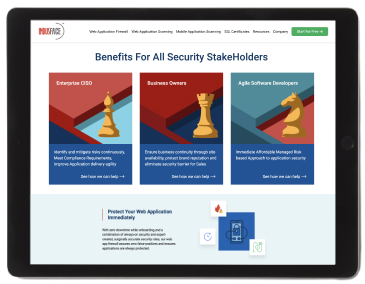
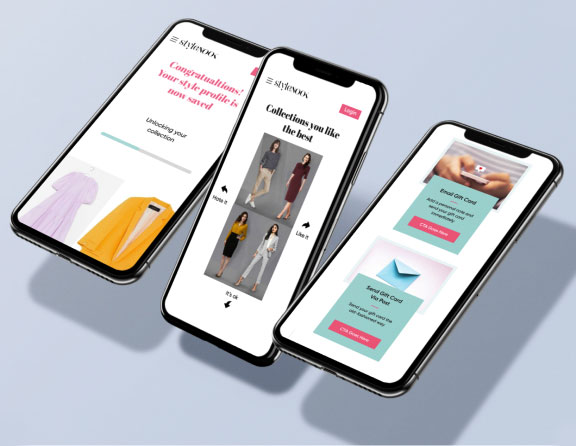
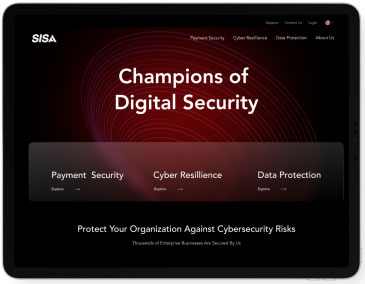
Clients who trust us









































Why Us? The OriginUX Advantage
OriginUX manages mobile product delivery as a coordinated business and engineering discipline that connects research, strategy, UX architecture, product engineering, security validation, cloud deployment, and continuous optimization.
Recommendations are based on user value, operational conditions, system dependencies, maintainability, risk, and measurable commercial outcomes rather than fashionable technologies or unsupported promises.
A dependable Mobile App Development Agency in Seattle should provide transparent communication, documented decisions, reviewable releases, accountable ownership, and a practical plan for supporting the product after launch.
What You Achieve Through Our Mobile App Development
Higher User Adoption
Apps designed around real behavior are easier to understand, which helps first-time users complete actions confidently.
Better Customer Convenience
Users can book, buy, learn, track, request support, and manage services directly from mobile.
Scalable Product Foundation
Structured architecture and reliable integrations make it easier to add features, users, and workflows later.
Our Mobile App Development Toolkit

Figma
For wireframes, prototypes, interface design, and design systems.

Flutter
For efficient cross-platform app development across Android and iOS.

Firebase
For authentication, analytics, cloud messaging, and crash reporting.

React Native
For scalable mobile apps with reusable components.
FAQS

OriginUX studio is based out of Bangalore, India.
We are a cross-disciplinary design team that loves to create great experiences and make meaningful connections for businesses and their users through UI & UX.
Industries we serve