AI Development Services in San Jose for Intelligent Products
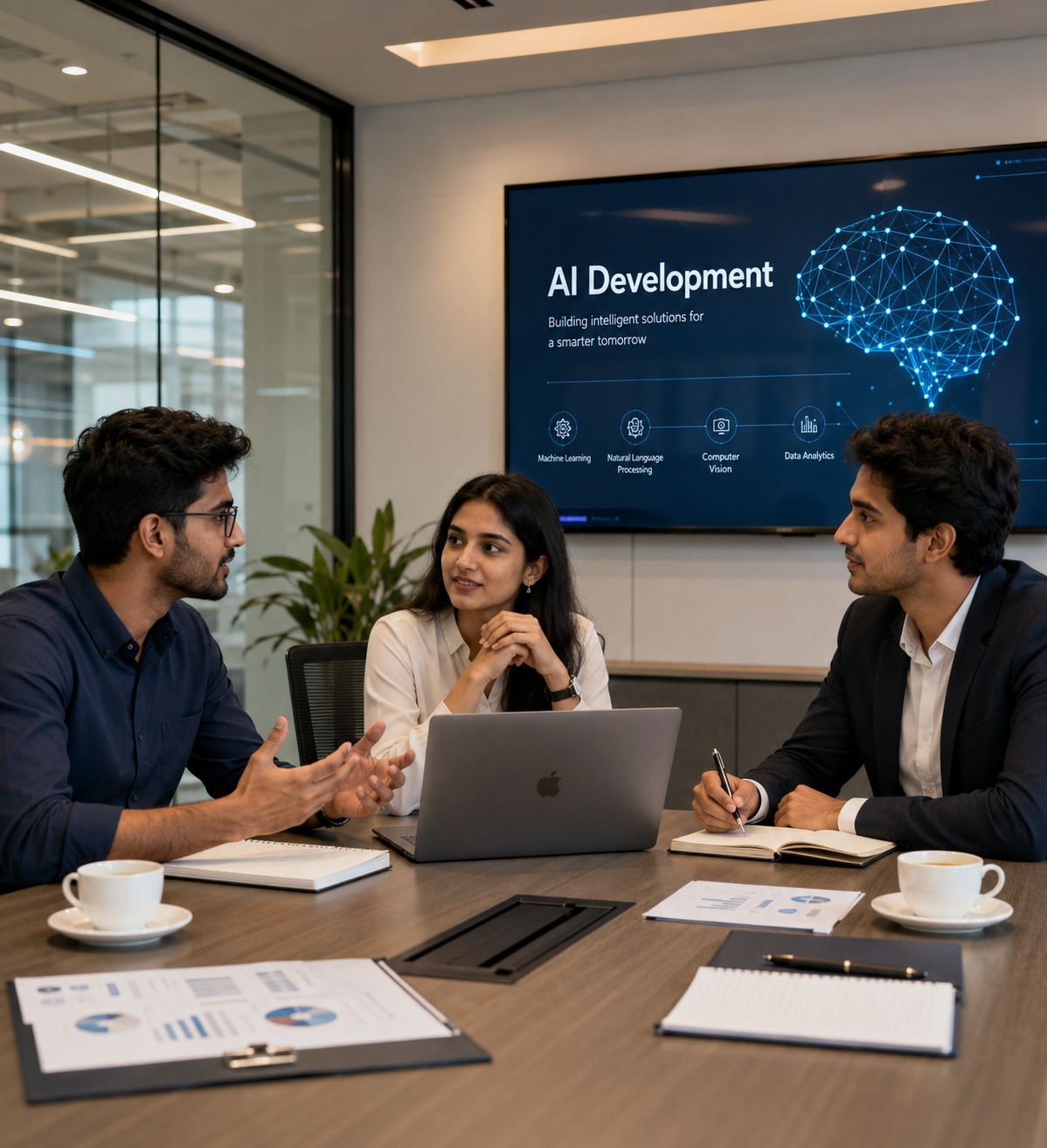
San Jose businesses sit at the centre of hardware innovation, enterprise software, cloud infrastructure, and advanced engineering. Origin UX provides AI development services in San Jose for companies that need intelligent products built around real technical and commercial goals. We create machine learning platforms, AI copilots, computer vision systems, predictive tools, and automation workflows that connect with existing technology. Our team studies users, product requirements, data quality, and system constraints before development begins. From early validation to deployment, we keep every stage focused, collaborative, and measurable, helping ambitious teams launch useful AI with less uncertainty and stronger long-term value today.
0+
AI Pilots Launched
0X
Faster Engineering Analysis
0%
Less Repetitive Review Work
Our Approch
Our Approach as an AI Development Company in San Jose
As an AI development company in San Jose, Origin UX combines product thinking with engineering discipline. We begin by understanding the use case, technical environment, users, and data before recommending models or features. This prevents overbuilding and keeps the project connected to a clear business result. Designers, AI engineers, and software specialists work together throughout delivery, testing important assumptions early. We also plan for performance, integration, security, monitoring, and future ownership so the finished solution can support real workloads and continue improving after launch today.
Core Services from an AI Development Company in San Jose
Specialised AI services help San Jose teams build dependable products, modernise platforms, and accelerate technical innovation.
Custom Machine Learning
Develop custom models for forecasting, classification, optimisation, anomaly detection, recommendations, and product intelligence across complex business environments.
AI Copilot Development
Build AI copilots that support technical teams, customers, and employees through guided, context-aware workflows across complex business tasks.
Computer Vision Engineering
Create visual intelligence systems for inspection, recognition, monitoring, quality control, and image-based analysis across industrial and product environments.
AI and Cloud Integration
Connect AI capabilities with cloud platforms, product APIs, databases, devices, and enterprise software across modern technical environments.
AI Product Optimisation
Improve existing AI products through model evaluation, latency reduction, cost control, and workflow redesign across production environments.
Our AI Development Process, Step by Step
Product Opportunity Discovery
We define the product challenge, intended users, available data, technical constraints, and expected outcome so the project starts with a focused, practical, and shared direction.
Technical Feasibility Assessment
Our team reviews data quality, architecture, integrations, security requirements, operating costs, and model options before recommending the most realistic development path for the solution confidently.
Prototype and Experience Design
We design the interaction flow and build a focused prototype, allowing stakeholders to test usefulness, response quality, system behaviour, and technical feasibility before full development.
Engineering and Model Testing
Engineers develop models, interfaces, APIs, and pipelines while testing accuracy, speed, reliability, permissions, edge cases, and performance under realistic product conditions, workloads, and user demands.
Deployment and Product Learning
The approved solution is deployed carefully, monitored with real users, and improved through performance evidence, adoption data, product feedback, and changing technical requirements after launch.
AI Product Roadmapping
A clear AI product roadmap connects user needs, business goals, available data, technical requirements, delivery phases, risks, responsibilities, and measurable outcomes before development investment expands with greater confidence and focus.
Prototype and MVP Validation
Working prototypes help teams validate the main workflow, compare model behaviour, gather stakeholder feedback, and identify usability or technical gaps before committing to product development and wider scaling with confidence.
Production-Ready Engineering
Maintainable architecture, secure APIs, tested integrations, documented code, and scalable infrastructure prepare the solution for real users, growing workloads, future features, internal ownership, and continued technical improvement over time confidently.
Continuous Model Improvement
Monitoring, evaluation, issue resolution, documentation, and planned improvements help the AI product remain useful, efficient, secure, and reliable as models, users, production requirements, and business priorities continue changing over time.
AI Solutions for Different Business Types

Technology and SaaS
Build AI-powered features, intelligent search, automation, copilots, and predictive tools that improve digital products while maintaining performance, security, usability, and reliability.

Semiconductor and Hardware
Use AI for defect detection, equipment monitoring, design analysis, quality inspection, predictive maintenance, and technical support across hardware and semiconductor operations.
Manufacturing
Apply AI to production planning, visual inspection, process optimisation, asset monitoring, and engineering analysis across factories, facilities, and complex industrial environments.

Internet of Things
Develop intelligent features for devices, sensors, field platforms, and connected systems using real-time data, cloud integration, and automated monitoring.

Cybersecurity
Improve threat detection, event analysis, alert prioritisation, investigation support, and security knowledge access through AI solutions built for sensitive digital environments.

Research and Development
Support research discovery, technical analysis, knowledge management, experimentation, and innovation workflows with secure AI tools designed for specialist information and complex data.
Clients who trust us









































Why San Jose Businesses Choose Origin UX
Origin UX brings AI engineering, product design, and software development into one coordinated process. We help San Jose teams decide what to build, how users should interact with it, and how the technology must perform in real conditions. Our approach covers data readiness, architecture, security, model evaluation, integration, and long-term ownership. Clear communication and early testing reduce wasted effort while creating AI products that remain practical as requirements evolve.
Product Value Created Through Better AI Engineering
Shorter Development Cycles
Shorten development cycles by validating core workflows early, coordinating design and engineering, and avoiding unnecessary features that add cost without improving user value over time.
More Reliable Model Performance
Improve model reliability through structured testing, representative scenarios, edge-case reviews, and clear performance measures connected to the product’s intended purpose and users in daily practice.
Lower Technical Debt
Reduce technical debt with maintainable architecture, documented integrations, reusable services, and clear ownership practices that support future features, teams, and platform changes with greater confidence.
Greater User Trust
Help users trust AI outputs through understandable interfaces, visible feedback, sensible review points, and clear handling when the model is uncertain or limited during use.
Scalable Product Foundations
Prepare products for growth with scalable infrastructure, cost-aware model choices, monitoring systems, and integration patterns that support larger audiences and more complex workloads efficiently today.
Tools and AI Technologies We Use

Python and Scikit-learn
Used for machine learning development, data processing, experimentation, evaluation, and production AI services across varied product requirements.

PyTorch and OpenCV
Support deep learning, computer vision, model optimisation, and advanced AI applications requiring flexible research and deployment workflows.

AWS and Google Cloud
Provide scalable infrastructure for model hosting, data pipelines, monitoring, storage, security, and connected product deployment.
Pinecone and Weaviate
Enable grounded knowledge retrieval from approved documents, databases, product information, and internal technical resources securely.
FAQ's

OriginUX studio is based out of Bangalore, India.
We are a cross-disciplinary design team that loves to create great experiences and make meaningful connections for businesses and their users through UI & UX.
Industries we serve