- Who We Help
-
Capabilities
Product DesignProduct DevelopmentAIGrowth & SupportProduct DesignProduct DevelopmentSoftware DevelopmentWeb Application Development (SaaS, PWA, Portals)Full Stack DevelopmentEnterprise Software DevelopmentDatabase Architecture & EngineeringWeb Development ServicesCMS DevelopmentSoftware Architecture & WireframingMobile App DevelopmentSoftware DevelopmentWeb Application Development (SaaS, PWA, Portals)Full Stack DevelopmentEnterprise Software DevelopmentDatabase Architecture & EngineeringWeb Development ServicesCMS DevelopmentSoftware Architecture & WireframingAIGrowth & SupportSoftware & App Maintenance Website Maintenance Performance Optimization (Speed, UX, Code) App Store Optimization (ASO) Feature Iteration & Versioning Conversion Rate Optimization (CRO) Analytics Setup & Reporting CRM & 3rd Party Tool Integration Tech Support & SLA-based Services Security Audits & Compliance
- Solutions
- Industries
- Design-Ops
- Technologies
- Company


Introduction to Design Thinking in D2C
Design thinking in Direct-to-Consumer (D2C) businesses drives innovation by empathizing with consumer needs, defining market challenges, and crafting tailored solutions. Through iterative prototyping and user testing, design thinking optimizes product offerings, enhances customer experiences, and fosters brand loyalty in the competitive D2C landscape.

Brands that trust us






































Overview of Design Thinking
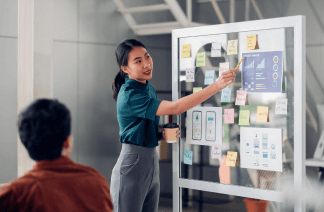
Design thinking is a human-centered approach to innovation and problem-solving that emphasizes empathy, creativity, and experimentation. It involves understanding the needs and desires of end-users, defining problems, generating ideas, prototyping solutions, and testing them iteratively. By adopting a user-centric perspective, design thinking helps uncover insights that may not be apparent through traditional analytical methods.
It encourages interdisciplinary collaboration, inviting input from diverse perspectives to foster innovative solutions.
Design thinking is not limited to designers; it's a mindset applicable to various industries and disciplines seeking to tackle complex challenges by placing human needs at the forefront of the creative process.
Importance of Design Thinking in D2C
Design thinking plays a pivotal role in Direct-to-Consumer (D2C) businesses by placing a strong emphasis on understanding consumer needs and preferences. In the D2C model, where brands interact directly with customers, effective design thinking enables companies to create products and experiences tailored to individual desires.
By empathizing with customers, D2C brands can develop innovative solutions that address specific pain points and deliver personalized experiences, ultimately fostering customer loyalty and satisfaction.
Moreover, design thinking facilitates agile iteration and experimentation, allowing D2C companies to adapt quickly to changing market dynamics and stay ahead of competitors. Thus, integrating design thinking methodologies is essential for D2C brands to thrive in today's competitive landscape.
Understanding D2C Business Model
Definition of D2C
D2C, or Direct-to-Consumer, is a business model where companies sell products or services directly to customers without intermediaries.
It bypasses traditional retail channels, leveraging digital platforms for direct sales. D2C brands prioritize personalized experiences, customer engagement, and cost efficiencies, enhancing control over pricing and the overall consumer journey.


Key Characteristics of D2C Brands
In today's rapidly evolving marketplace, Direct-to-Consumer (D2C) brands are revolutionizing the way products and services reach consumers.
With a focus on cutting out intermediaries and establishing direct connections with customers, D2C brands embody several key characteristics that set them apart.
Let's delve into five fundamental traits defining the essence of D2C brands

Direct Sales
D2C brands sell products or services directly to consumers, bypassing intermediaries like retailers or wholesalers.

Digital-first Approach
D2C brands often leverage digital platforms and e-commerce channels for sales, marketing, and customer engagement.

Customer-Centricity
D2C brands prioritize understanding and meeting the specific needs and preferences of individual consumers.

Brand Control
D2C brands maintain full control over branding, pricing, and the overall customer experience, fostering brand consistency and authenticity.

Data-Driven Insights
D2C brands utilize data analytics to gain insights into consumer behavior, enabling personalized marketing strategies and product development.
Advantages of D2C Model
Unlocking unprecedented advantages, the Direct-to-Consumer (D2C) model reshapes commerce dynamics through direct relationships, higher margins, and customer-centric strategies.
Here are some positives of the D2C model
Direct Customer Relationship
D2C brands have direct access to customer data, allowing for personalized marketing, tailored product offerings, and better customer service.
Control Over Brand Experience
D2C brands maintain control over branding, messaging, and the overall customer experience, ensuring consistency and authenticity.
Higher Profit Margins
By cutting out intermediaries like wholesalers and retailers, D2C brands can potentially achieve higher profit margins on their products.
Agility and Flexibility
D2C brands can quickly adapt to market trends, consumer preferences, and feedback, enabling faster product iterations and innovation.
Data Insights
D2C brands gather valuable data on consumer behavior, preferences, and purchasing habits, allowing for data-driven decision-making and targeted marketing strategies.
Global Reach
With e-commerce platforms and digital marketing, D2C brands can reach consumers worldwide, expanding their market reach beyond geographical boundaries.
Customer Loyalty
Direct interactions with customers foster stronger relationships and brand loyalty, leading to repeat purchases and advocacy.
Feedback Loop
D2C brands have a direct feedback loop with customers, enabling them to gather insights for product improvement and innovation in real time.
Case Studies
Real-world Examples and Success Stories
Myntra
Myntra is one of India's leading fashion e-commerce platforms that has successfully applied design thinking principles to enhance its D2C business.
Application of Design Thinking
User-Centric Approach
Myntra adopted a user-centric approach to understand the evolving fashion preferences and needs of Indian consumers. They conducted extensive user research to gather insights into their target audience's shopping behavior, style preferences, and pain points.
Personalization and Customization
Leveraging design thinking principles, Myntra developed sophisticated algorithms and data analytics tools to offer personalized product recommendations and curated collections tailored to each customer's unique tastes and preferences.
Innovative Shopping Experience
Myntra introduced innovative features such as augmented reality (AR) fitting rooms and virtual styling sessions, allowing customers to visualize how clothing items would look on them before making a purchase.
Outcome
Myntra's focus on design thinking and user experience has resulted in significant business growth and customer engagement. The platform has become a preferred destination for fashion-conscious Indian consumers, with a wide range of personalized offerings and a seamless shopping experience.
International SuccessStory: Warby Parker (USA)
Warby Parker is a well-known American D2C eyewear brand that disrupted the traditional eyewear industry with its innovative approach to design and customer experience.
Application of Design Thinking
Empathy-Driven Design
Warby Parker started by empathizing with consumers frustrated by the high cost and lack of options in the eyewear market. They conducted in-depth interviews and observations to understand customers' pain points and preferences.
Affordable Luxury
Through design thinking, Warby Parker identified the need for affordable yet stylish eyewear. They developed a vertically integrated supply chain and direct-to-consumer model, cutting out middlemen and offering high-quality, fashionable glasses at a fraction of the price of traditional retailers.
Home Try-On Program
Warby Parker introduced a unique home try-on program, allowing customers to select up to five frames online, try them at home for free, and then purchase their favorite pair. This approach combined convenience with the tactile experience of trying on glasses in-person.
Outcome
Warby Parker's innovative use of design thinking has disrupted the eyewear industry and garnered a loyal customer base. The company's commitment to affordability, style, and customer-centricity has fueled its rapid growth, making it a prominent player in the D2C space and inspiring similar business models across industries.
FAQs

OriginUX studio is based out of Bangalore, India.
We are a cross-disciplinary design team that loves to create great experiences and make meaningful connections for businesses and their users through UI & UX.
Industries we serve