- Who We Help
-
Capabilities
Product DesignProduct DevelopmentAIGrowth & SupportProduct DesignProduct DevelopmentSoftware DevelopmentWeb Application Development (SaaS, PWA, Portals)Full Stack DevelopmentEnterprise Software DevelopmentDatabase Architecture & EngineeringWeb Development ServicesCMS DevelopmentSoftware Architecture & WireframingMobile App DevelopmentSoftware DevelopmentWeb Application Development (SaaS, PWA, Portals)Full Stack DevelopmentEnterprise Software DevelopmentDatabase Architecture & EngineeringWeb Development ServicesCMS DevelopmentSoftware Architecture & WireframingAIGrowth & SupportSoftware & App Maintenance Website Maintenance Performance Optimization (Speed, UX, Code) App Store Optimization (ASO) Feature Iteration & Versioning Conversion Rate Optimization (CRO) Analytics Setup & Reporting CRM & 3rd Party Tool Integration Tech Support & SLA-based Services Security Audits & Compliance
- Solutions
- Industries
- Design-Ops
- Technologies
- Company


Revolutionizing B2B Website UX: A Blend of Best Practices and AIDA Marketing Framework
February 15, 2024 | Read Time : 3 mins
Table of Contents
In the realm of digital marketing, the AIDA model (Attention, Interest, Desire, Action) serves as a powerful framework for understanding and enhancing the user experience (UX) on B2B websites.
By integrating UX best practices with the AIDA framework, businesses can create compelling websites that not only attract but also convert their target audience effectively. This article delves into essential UX strategies and illustrates how the AIDA model can amplify their impact on B2B websites.
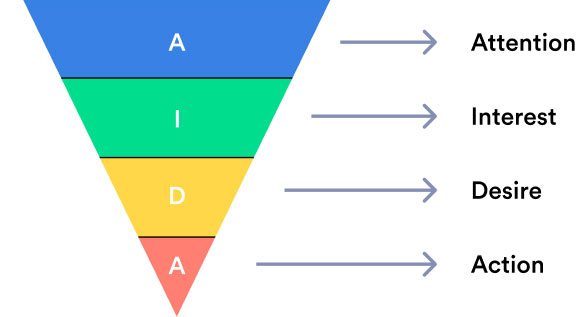
Integrating UX with the AIDA Framework
The AIDA model, which stands for Attention, Interest, Desire, and Action, provides a proven structure for crafting marketing strategies that guide users through a journey from awareness to conversion. When applied to website design, it helps in creating a user experience that naturally leads visitors towards taking desired actions.
1. Capturing Attention with Simplified Navigation
AIDA Stage: Attention
The first step in engaging users is to grab their attention. Simplified navigation ensures that visitors can easily find what they are looking for, making a strong first impression. Logical structure and clear labels are crucial for drawing users in and encouraging them to explore further.
2. Generating Interest through Mobile Optimization
AIDA Stage: Interest
As users delve deeper, it’s vital to maintain their interest. Mobile optimization, through responsive design and a mobile-first approach, ensures that users have a seamless experience across all devices. This responsiveness keeps users engaged and interested in what your site has to offer.
3. Creating Desire with Fast Loading Speeds
AIDA Stage: Desire
To transform interest into desire, your website must perform flawlessly. Enhancing loading speeds through image optimization and browser caching makes your site more appealing. A fast-loading website reduces frustration and builds a positive user experience, increasing the user’s desire to engage with your content.
4. Facilitating Action with Personalized Experiences
AIDA Stage: Action
Personalized user experiences, tailored through data analytics and user personas, encourage users to take action. By providing relevant content and solutions that address the specific needs and preferences of your audience, you increase the likelihood of conversion.
Enhancing the AIDA Journey with Marketing-Centric Design
1. Engage Users with Interactive Elements
Interactive content like quizzes and calculators can grab attention, generating immediate engagement and leading users through the AIDA funnel by maintaining their interest.
2. Build Trust with Social Proof
Incorporating testimonials and case studies showcases real-world success stories, enhancing desire by building trust and credibility.
3. Support Users with Chatbots
Chatbots provide real-time assistance, facilitating the action stage by helping users find the information they need to make decisions.
4. Clarify CTAs
Clear and compelling CTAs guide users towards the action you want them to take, crucial for moving them through the final stage of the AIDA model.
5. Optimize with A/B Testing
A/B testing allows for the refinement of every element, ensuring that each stage of the AIDA process is optimized for maximum effectiveness.

6. Personalize for Different Segments
Tailoring experiences to different segments of your audience ensures that the content is relevant and engaging, moving them smoothly through the AIDA stages.
7. Connect Through Storytelling
Storytelling can captivate users from the attention stage and keep them engaged throughout their journey, enhancing every stage of the AIDA model.
By marrying UX best practices with the AIDA marketing framework, B2B websites can significantly improve their ability to attract, engage, and convert their target audience. This approach ensures a cohesive user journey that not only meets user needs but also aligns perfectly with marketing objectives, turning your website into a powerful tool for driving business success.

AUTHOR
Team OriginUX
OriginUX Studio is a CoE for User Experience providing UI & UX across Product, Service and Customer Experience Design. We are a cross-disciplinary design team that loves to create great experiences and make meaningful connections for businesses and their users through UI & UX.
Founded in 2016, our larger purpose is to help brands understand what they want to do and where they want to go. To do that we have to make understanding customer experience simple, effortless, and affordable for everyone.